
The science
Why the shavings follow the wand
The five-minute physics of the toy: what magnetite is, why the hair stands up in bristles, and how to turn a mustache into a science lesson.
What is actually in there
The gray powder is magnetite, an iron oxide, ground fine. Iron is one of the few common materials a magnet grabs at room temperature, which is why the wand moves the powder and ignores the cardboard, the plastic and your fingers.
The original filling was literal factory waste: dust from grinding magnets, swept off the floor of the Smethport plant. The toy was recycling before the word was fashionable.
Why the hair bristles
Look closely at a fresh beard and it is not a flat smear; it stands up in tiny spikes. Each shaving becomes a small temporary magnet while the wand is near, and they chain up end to end along the invisible field lines, the same pattern iron filings make around a bar magnet in a textbook photo. Willy’s beard is a field diagram wearing a face.
Why it lets go
A magnet’s pull drops off fast with distance. Against the bubble, the wand wins easily against gravity; pull it an inch away and gravity is back in charge, which is why the powder drops where you leave it instead of chasing the wand across the room. Tilting the board just gives gravity the whole card to work with, and the beard slides home.
Turning it into a lesson
For a curious kid, three experiments cost nothing. Drag the wand under the board instead of over the bubble: the powder follows through the cardboard, because the field does not care about paper. Move the wand in slowly from far away and find the exact distance where the powder first twitches: that is the edge of the field, made visible. And build a spike as tall as the powder allows, then watch it collapse the instant the wand leaves: temporary magnetism, expiring on schedule.
None of this needs to be explained well to work. The toy shows the field; the kid does the rest.
Boards this guide keeps mentioning
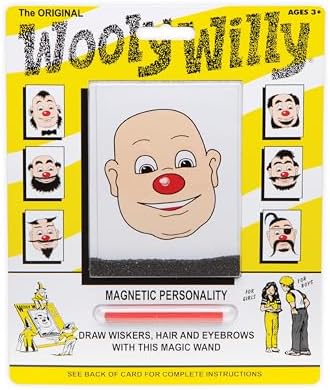
Original Wooly Willy
The current PlayMonster box of the 1955 magnetic drawing toy, and the listing most people land on first.
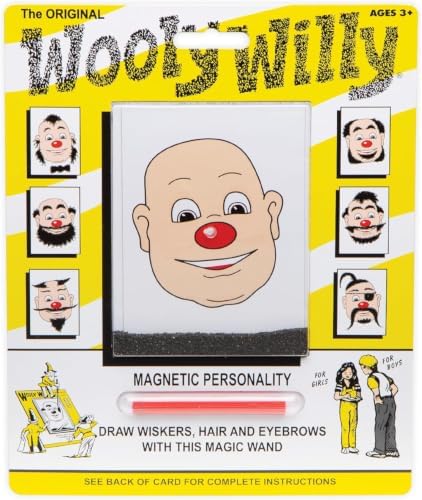
Wooly Willy: travel and gift listing
The newest listing on the shelf, pitched at road trips, party bags and the bottom of a stocking.